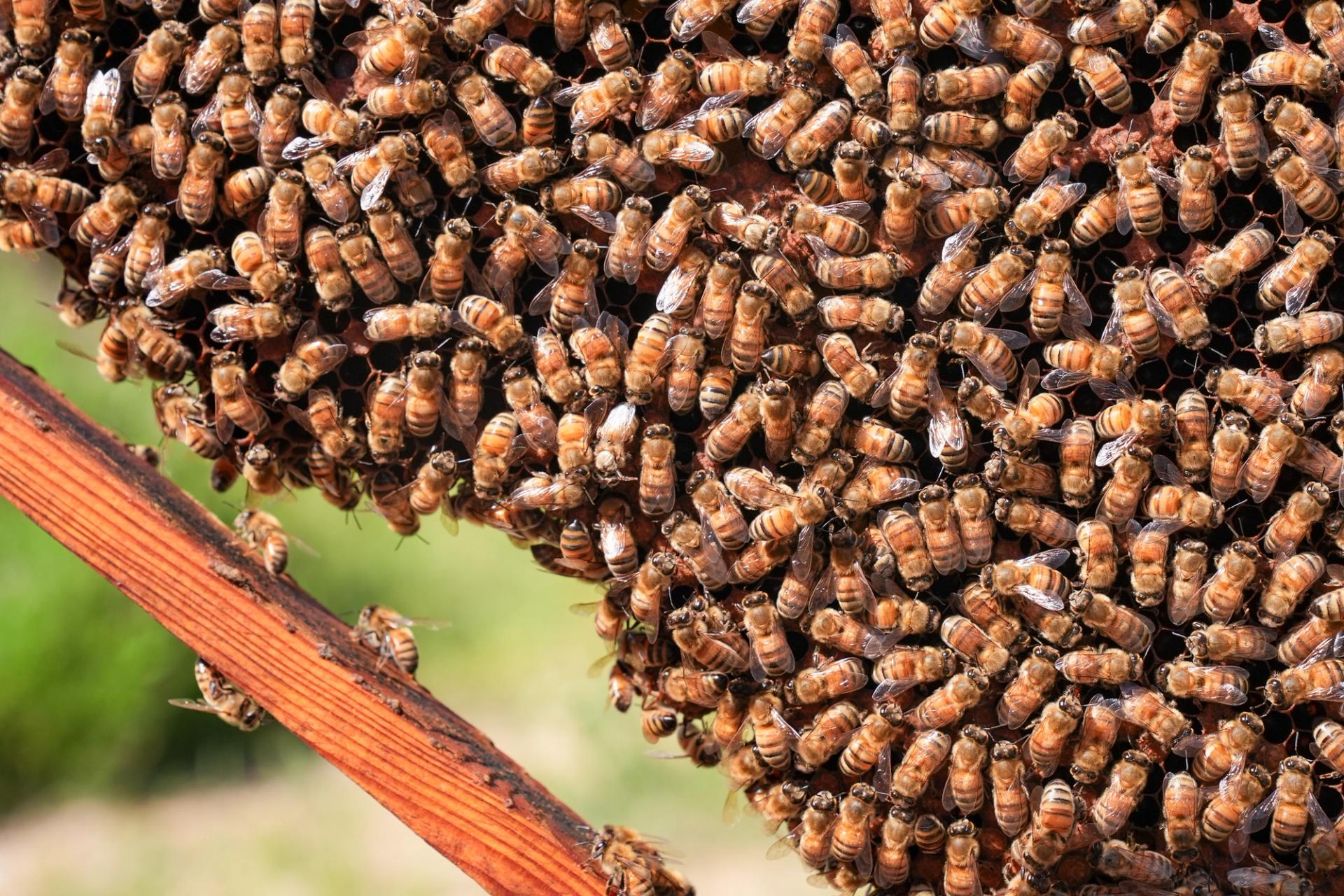
Central Texas’ honeybee population has seen a 65% decline this year over last year, which may change your grocery lists. Here’s what you need to know:
😠 A Mite Is To Blame
Varroa mites, which have been inflicting damage on honeybee colonies since 1987, are one of the reasons for major losses in colonies right now, said Garrett Slater, an assistant professor professor and honeybee extension etymologist at Texas A&M AgriLife. The mites are basically like ticks that feed on honeybees and transmit deadly viruses.
“Imagine yourself as a bee and having a plate-sized tick on top of you. That’s how big (the mites) are, relative to the bee,” he said.
While the mites are not a new problem, they have become increasingly more immune to the treatment that was most effective at killing them off in recent years.
🍉 Grocery Stores May Be Impacted
Honeybees are important pollinators for many of the fruits and vegetables Austinites eat. With a decline in the honeybee population, Slater says we may see a decline in products like almonds and fruits at our grocery stores.
To help the bees, plant some native flowers!
🧪 Mite Mitigation Techniques Are in the Works
As some mites become resistant to chemicals beekeepers have been applying to their colonies, scientists are working on breeding mite-tolerant honeybees. Slater is currently working with a research lab in Overton, which is east of Tyler, to breed such bees.
“So some bees can actually be bred to find the mites, chew their legs off, and kill them. So we're really focused on breeding for that,” he said.
🐝 What To Do if You See a Bee
- Don’t kill it! We need bees.
- Honeybees won’t bother you if you don’t bother them.
- Don’t swat at the bee; instead, flap your arms by your side. They’re attracted to movement.
- Know that honeybees can only sting you once – they have barbed stingers. Bumblebees, however, can sting you multiple times.
- Dark colors cause bees to become agitated, so if you’re scared of running into a bee, don’t wear black.