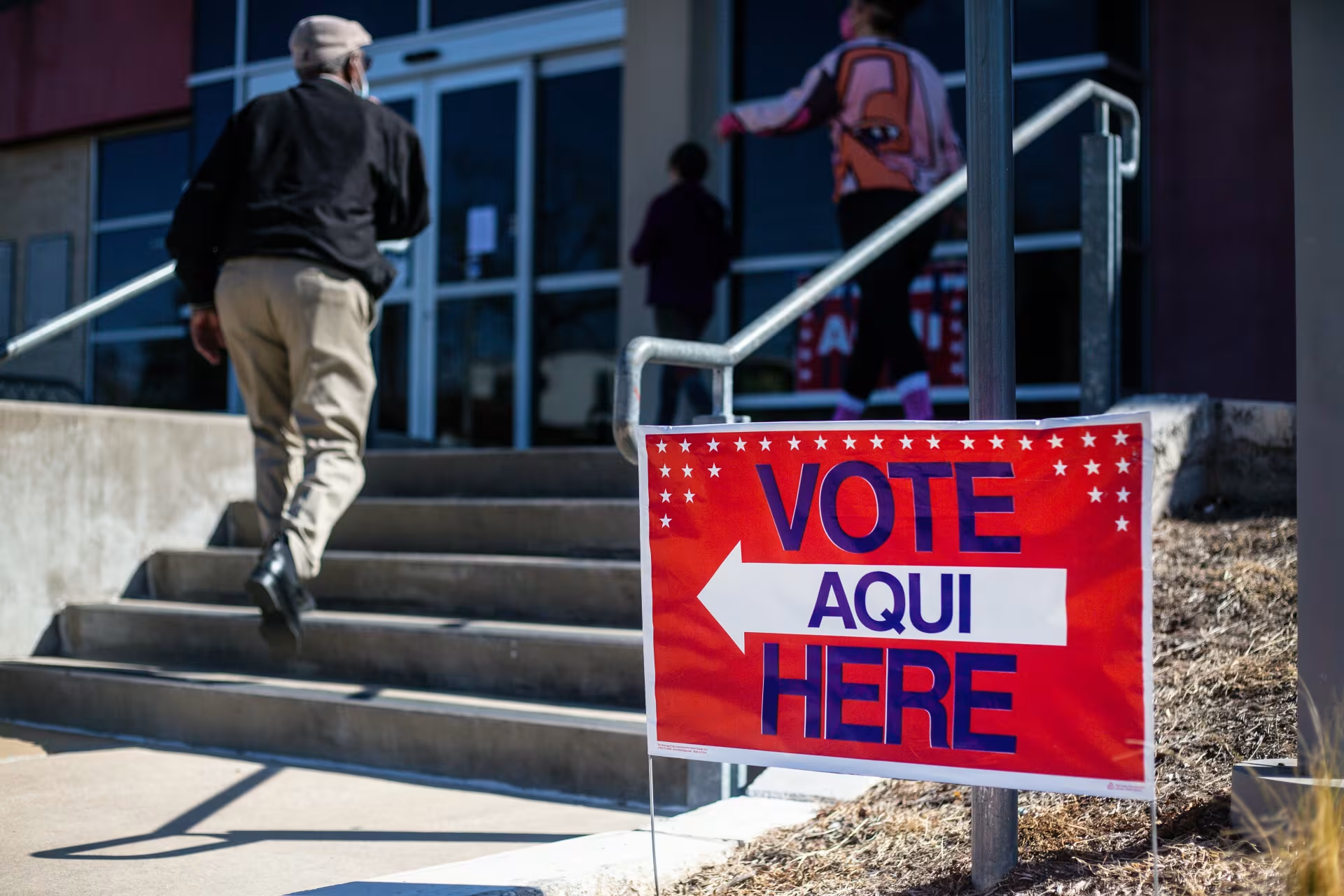
After the November failure of Proposition Q, which would have raised property taxes in order to give the city $110 million to spend, Austin City Council members had to revamp the city’s budget for fiscal year 2025-26.
Money had to be moved around or cut without the extra cash Prop Q would have provided, and council members ended up not expanding some services like they had wanted to, and shrinking some city department budgets.
Here’s what you need to know, courtesy of City Cast Austin contributor Amy Stansbury of The Austin Common:
💰 Not All Was Lost Without Prop Q
Proposition Q would have allowed the city to hire 60 new park maintenance employees to help with Austin’s increase in parkland. Even without the measure passing, the new budget allows the city to hire 15 such employees.
Austin-Travis County Emergency Medical Services also received enough funding to have a 24/7 mental health response, and some money was put toward avoiding brownouts at EMS stations. Brownouts happen when not enough people are working at a station, and ambulances can’t run. The department has a high vacancy rate right now, Stansbury said.
“This was one of the main directives – even if we have to make other cuts in other areas, we don’t want brownouts at EMS,” Stansbury said of the council’s budget process.
📉 Three Departments Saw Funding Cuts to Social Service Contracts
Austin Public Health, Austin Economic Development, and Austin Municipal Court all saw a 10% funding cut to existing contracts for social services in the new budget, which means contractors will have to figure out how to do more with less or raise the money another way, Stansbury said.
Money was also taken out of the city’s reserves to help with Austin’s budget deficit. The move is allowed, that’s what the reserve is for, but it won’t be something the city can do every year.
👀 Austin City Council Is Looking at Their Own Finances
At a recent Austin City Council meeting, members approved a resolution to work on new policies regarding council spending. Meanwhile, Prop Q opponents are gathering signatures to force an election over a city-wide audit. The moves come after multiple stories in the Austin American-Statesman that revealed council members were using taxpayer money too liberally. One such story was published just before Election Day.
“It certainly hurts public trust and it’s not a good sign,” Stansbury said. “I think it makes the public angry and upset. It’s like, if you’re going to ask us for money, you’ve got to tighten up your own ship.”