I remember vividly the first time white people showed up in my grandparents' East Austin neighborhood.
We were all at the house for Sunday dinner, and a few of my younger boy cousins came running inside talking about a white woman who was “lying on the ground,” next door. A few adults and older cousins ran outside thinking she’d gotten hurt. Turns out, she was sunbathing, just laying out on a towel on her concrete driveway. Everyone hurried back inside laughing and teasing my cousins, but we talked about that woman for the rest of the day.
Who was she? Where did she come from? Did she know what neighborhood she was in? She definitely didn’t look like the handful of other white people sprinkled throughout the neighborhood. She was much younger. More polished. Then, the stories started. My uncle spoke of a young white couple that moved in on his street a few months before. My aunt told us about an older white man building a house on her street where one of our favorite abandoned lots used to be. The adults sat around sharing these rumors and tales as if they were talking about ghosts and demons haunting us at night. There were hushed tones and gasps of disbelief.
I remember my Grandmaw saying, “Chiiiiile, we better enjoy this neighborhood while we can, 'cause white folks change everything.”
And they did.
For me, gentrification didn’t start as greedy developers buying up all the property on my grandparent’s street and building shitty houses. It started with one white woman sunbathing in the driveway of her new cute little bungalow style house next door to 2002.
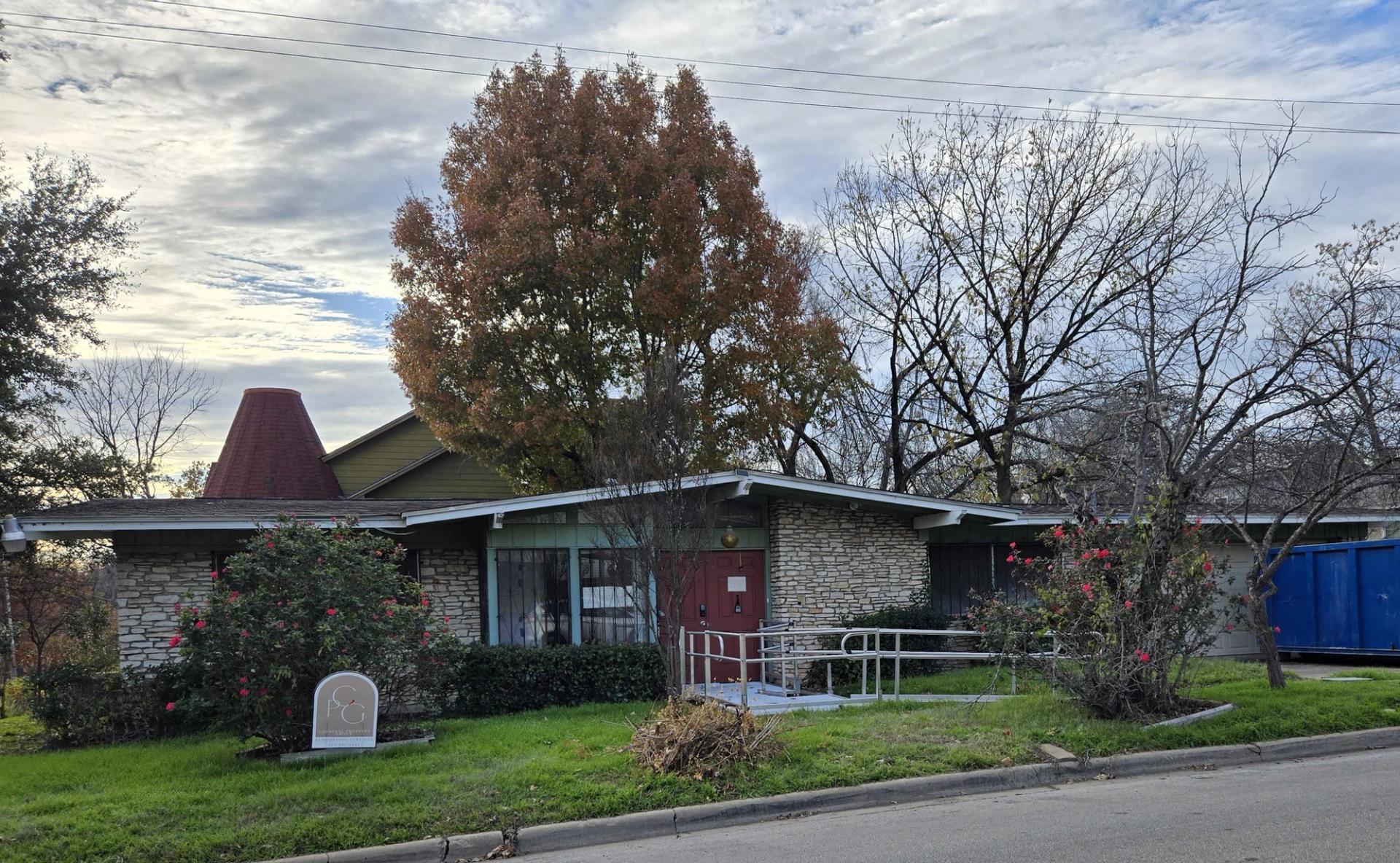
The house is a mid-century, three-bedroom, ranch style house that sits on a corner. My PawPaw had it built for Grandmaw in 1963. They spent almost 60 of their more than 70 years together in that house. It was a dream realized. A huge yard wraps around the house dotted with big trees, rose bushes, and that kind of soft plush grass you want to lay on for hours and read books, or practice your cartwheels and roundoffs with your cousins.
By the time I came along, the house had the lived-in feel and warmth that you can only get when you know there’s a consistent stream of people coming in and sharing the space. There were decorative plates hung in the kitchen, family photos lining every wall, beautiful wood paneling that made it always feel cozy, and a formal dining room that was the sacred space with all the things we weren’t allowed to touch. My favorite part, hands down? The intercom system. The intercom was used often by Grandmaw to call us to come eat or fuss at us for being rowdy, but more than anything, it served as a secret way for my cousins and I to communicate and find each other. The house was our fortress and the center of our lives. Almost everything we needed was within walking distance: Church, school, Alamo Park, Starks (our favorite corner store), and Medical Plaza (which had the city's only Black dentists, Black optometrist, and Black pharmacy). The neighborhood felt like our domain, with no corner of it off-limits, and the house was our “base.”
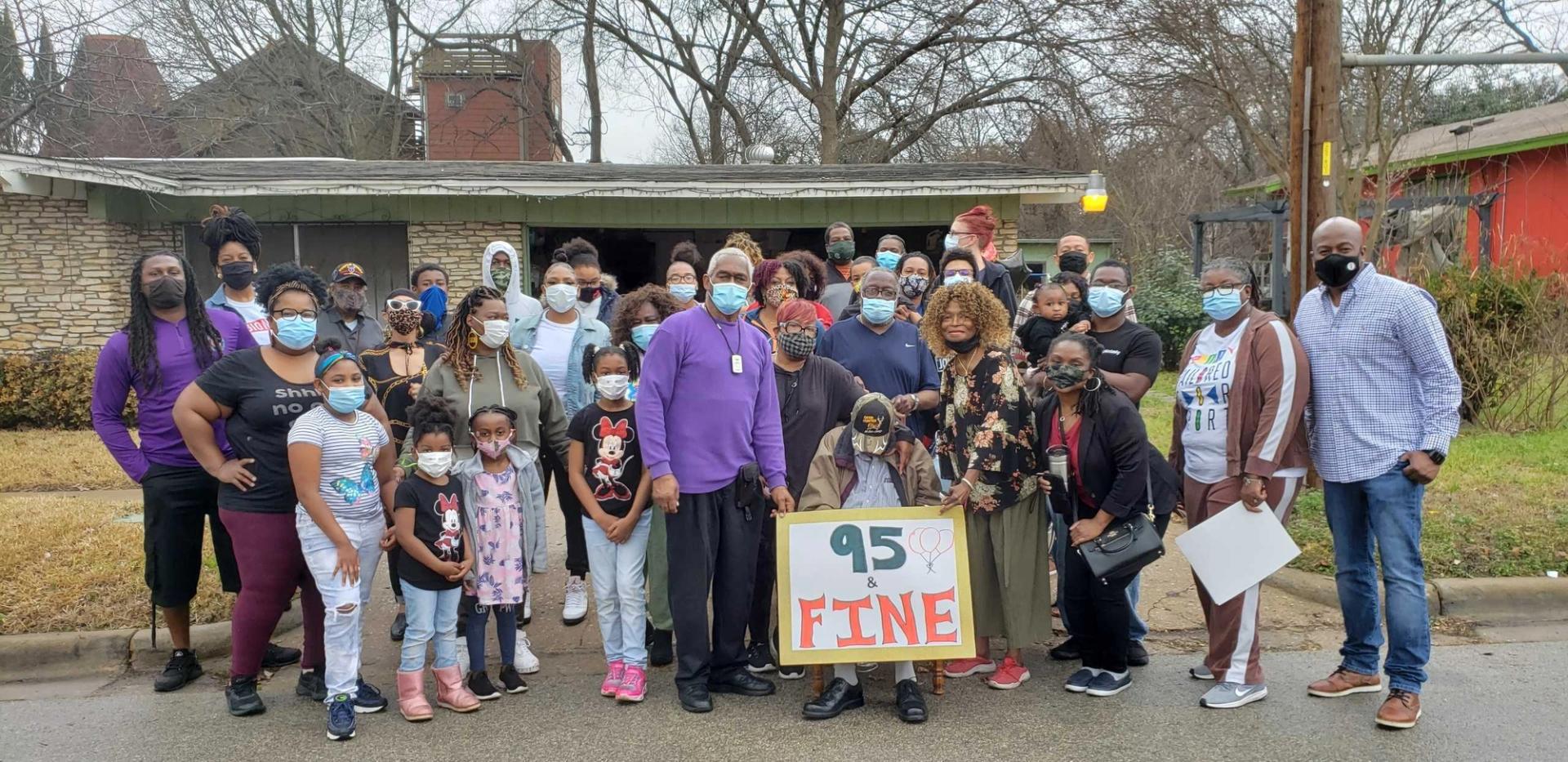
Most of the Johnson family is seen here outside 2002 in February 2021 for PawPaw's 95th birthday. Pawpaw is in the front crying with his head down because he was so emotional.(Nikki DaVaughn/City Cast Austin)
Grandmaw and PawPaw had an open-door policy for the house, so anyone in the neighborhood or church family that needed a safe place was welcome. Sundays in particular were a sanctuary for seemingly anybody who wanted a home-cooked meal. After church, the house would fill with pastors, deacons, neighborhood kids, random strangers, and every auntie in a 2-mile radius. I loved Sundays! That’s when the house really shined.
Every area had a purpose. Dominoes, cards, and drinking happened in the garage (door open, of course, in case any passersby wanted to get in on the game). The front, back, and side yards were full of kids either playing hide-and-seek and red light/green light, or practicing cartwheels and playing hand clap games (Miss Mary Mack was a favorite)! Inside, the master bedroom was in the back of the house and reserved for special company to relax while waiting for the food to be ready. The second bedroom was where all the babies slept, and the third bedroom was the TV room for any kids that didn’t want to be outside. The formal dining room served as a lounge and quiet place to eat. But the main attraction was the living room and kitchen area. My dad and my uncles always sat at the bar, my PawPaw on the couch, and every woman that could fit was in the kitchen doing whatever task my Grandmaw assigned. It was lively and full of laughter. Loud, but not in the way that's grating. It was the sound of family. It was chaos perfected by years of practice.
This sounds traditional and gendered by today’s standards, but back then, it was more generational than gendered. My dad, uncles, and eventually boy cousins took care of the state of the house, guided by my PawPaw. My mama, aunties, and eventually my girl cousins, sister, and I handled the cooking, guided by my Grandmaw. They were preparing to pass the torch the best way they knew how, we just didn’t realize it then. Somewhere along the way, our elders sat down and handed the baton to us, and now it seems like we didn’t have it long enough.
The passing of our Grandmaw and PawPaw literally marked the end of an era. We lost Grandmaw first, then my dad, then Uncle James, then Pawpaw, and the silence after each loss was deafening. The gatherings dwindled, and the visits almost stopped completely. The house felt heavier, less bright, and so goddamn still. I think everyone abandoned it because we couldn’t handle the loss. We couldn’t keep it going. So here I am now, trying to express my gratitude for a home that’s no longer mine, but I can’t let go of. It sounds ridiculous, but I am so profoundly grateful. For every fucking moment. I wouldn’t change any of it and I know I’m not alone.
We all miss it.
Along the way, 2002 has helped raise five generations of the Johnson family – five generations of birthdays, new babies, new loves, triumphs, defeats, deaths, and memories, all shared inside our little house on the corner. Some of the best and worst times of my life happened in that house, and I’m better for all of it.
I don’t know why my grandparents were so adamant on selling it. We’re a big family, so I think they just wanted peace for us and no fighting. But giving up 2002 has absolutely splintered us. The arguments still happened and as a result, we’re not the same.
The harsh reality is, that it’s officially no longer ours. That neighborhood is officially no longer ours. No one looks like us on the street anymore. The places we walked to, the yards we ran through, and the businesses that knew my family by name are gone. The sounds, smells, and colors that are in my DNA are gone. It belongs to someone else now. Just like our house and so many others’. Now we’re the stranger sunbathing in the driveway.
Selfishly, my hope is that whoever bought 2002 will keep the bones. It’s full of the love and history of my family and that’s a hell of a foundation to build on and bring forth something new.
Just the possibility of it remaining fills me with joy. Regardless of what the new owner decides to do, this letter can serve as a reminder that my family existed, thrived, and had our place in this city.