My metaphorical copy of “Funny Girl” is beat up. If streaming didn’t exist, my VHS tape of the movie would be unusable with film tape falling out of it. (Is that how VHS tapes die? I don’t remember.) The 1968 hit movie that got Barbra Streisand her first Oscar is my blankie that was given to me as a child and remains sacred in my life more than two decades later.
The way I remember it, my mom sat me down when I was probably 9 years old or so and said, “We’re watching ‘Funny Girl.’” Streisand was a key part of my growing up: There was learning to shave my legs, putting eyeliner in my waterline for the first time, getting my driver’s license, and getting to know Barbra Streisand.
Other Streisand films followed in my mom’s curriculum: “The Way We Were,” “Hello, Dolly!” and “A Star Is Born.”
“Funny Girl” is loosely based on the life of the real comic and actress Fanny Brice. The musical follows Brice as she reaches for stardom in New York City after World War I, and falls in love with gambler Nicky Arnstein, two feats made all the more difficult by Brice not being considered beautiful.
Streisand starred as Brice when the show hit Broadway in 1964.
Watching the movie as a kid was all sparkles and realizing I wanted to live inside a Broadway show. In high school, Streisand’s performances of songs “Don’t Rain on My Parade” and “Funny Girl” made me feel better when I was sad and made me feel secure in who I was: A funny, powerful Jewish girl. (Cut to me in my school’s cafeteria after the latest “Glee” episode where Lea Michele cosplayed as Streisand, telling people that Streisand refused to get a nose job.)
Now that I’m a full-blown adult, “Funny Girl” is all about stepping into my power in my career and personal life.
So, a year ago when Texas Performing Arts announced the stage show was coming to Bass Concert Hall in 2025, I called up my favorite funny, powerful, Jewish girl – my mom. It was finally going to happen for us. We were seeing “Funny Girl.” Going to the show with my mom felt like a lifelong quest was finally complete, like we had taken our full form.
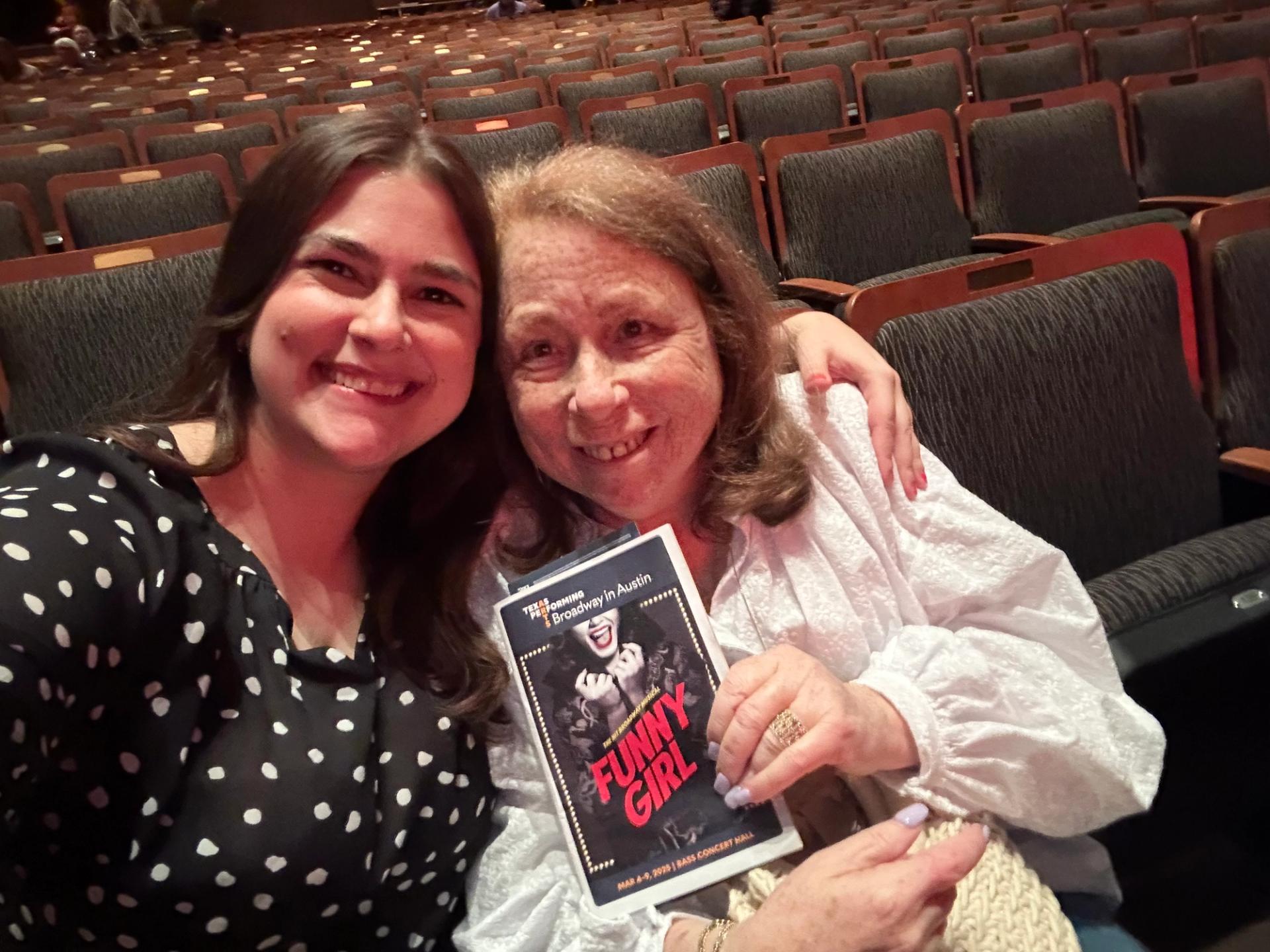
Me and my funny girl, my mom. (Kelsey Bradshaw/City Cast Austin)
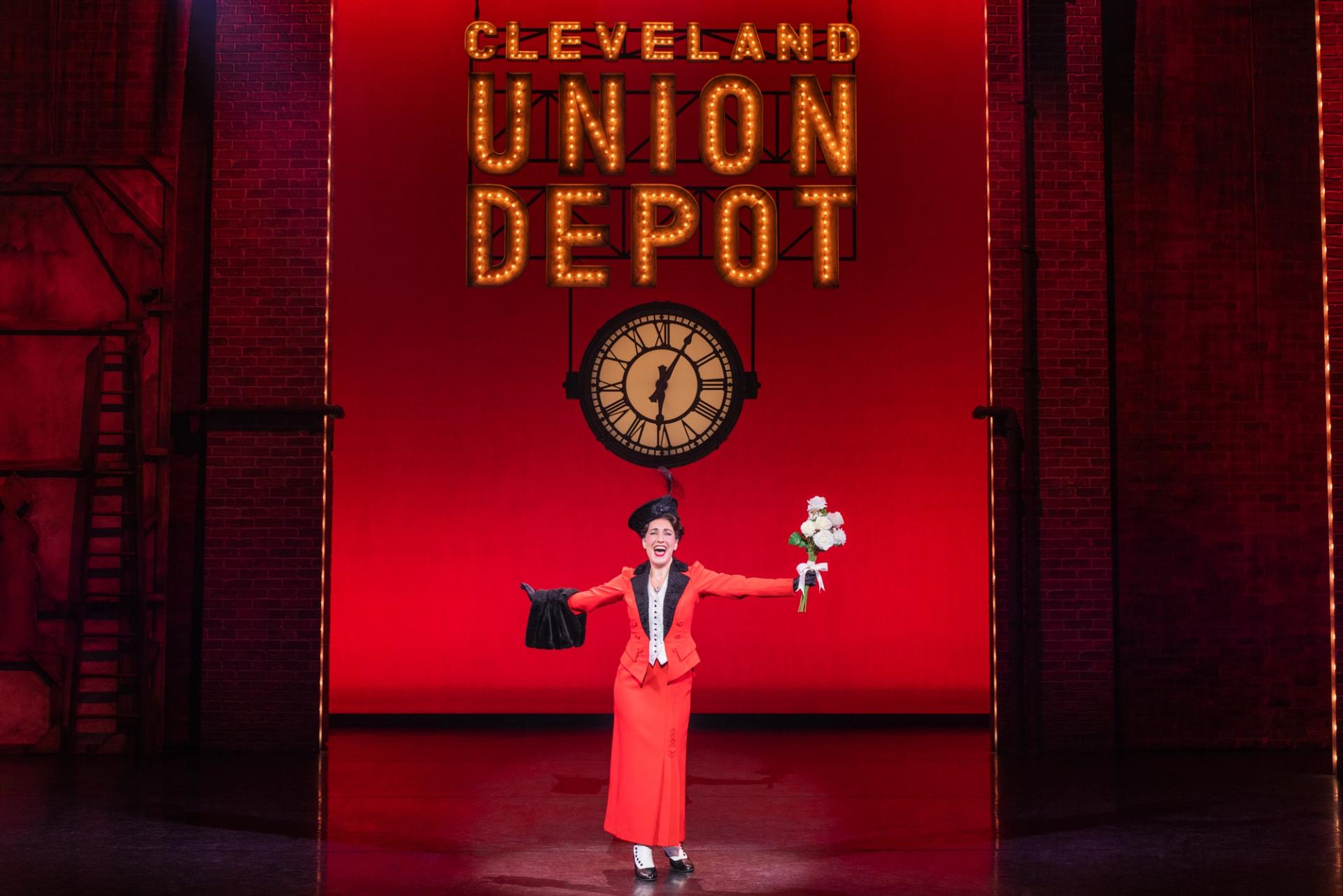
The national tour stars Hannah Shankman as Brice, a role as meant for Shankman as much as I was meant to see her perform it. Shankman is a Jewish girl from New York who grew up familiar with Streisand from a young age.
“To be part of that legacy just feels so humbling,” Shankman said of following in the footsteps of Streisand, Michele, and others. “It’s truly such an honor.”
The role of Brice is, like the show’s title suggests, funny. Shankman pulls off the physical comedy well, twerking a fake baby bump, tap dancing in a bagel costume, pretending to faint, crawling away from her love interest, and fist pumping when she finally kisses him.
“(Fanny) really set the stage for so many Jewish comedians,” Shankman said. “Fanny was the first one to use Jewish humor as a means of commercial entertainment.”
You root for Brice – she’s a star whom everyone in her Brooklyn neighborhood doubts because she’s not pretty enough. “When a girl's incidentals/ Are no bigger than two lentils/ Then to me, it doesn't spell success,” are lyrics from the show, for example.
You root for her even harder when the hottest guy in town, Arnstein, really sees her. She’s funny to him, sure, but he wants to kiss her and support her career. You root for her the most at the end, when, without spoiling too much, she must be the one to see her own power and be the star in more than just the Ziegfeld Follies.
Shankman’s finale act had me crying and thinking, “I wish I could be in the theatre every night,” if only to experience the kind of empowerment I did. The audience watches as Brice turns her thinking around in real time to realize she’s her own hero as she sings “Funny Girl” into a reprise of “Don’t Rain on My Parade.”
“I think the message that Fanny really sends to people is that women can be successful and have it all and it’s not about finding someone who will give it all to you, it's about giving it all to yourself,” Shankman said.
During the show, Brice says her relationship with the audience is “heimish,” the Yiddish word for familiar or comfortable. It struck me that that was really true. True for Brice in her New York City world and true for the Austin audience – whether you’re a longtime fan of the show or it’s your first time in a theatre, “Funny Girl” has a familiar story that will find your heart. It is absolutely a night well spent in love, comedy, and realizing your worth.
Tickets are still available for “Funny Girl” at Bass Concert Hall. The show runs through March 9 and tickets start at $35.