February marks 100 years of Black History Month in the U.S. In Austin, the largest Black History Month event takes place in the most gentrified part of the city. I wanted to find out what that looks like.
The Event
Solar Saturday is the George Washington Carver Museum, Cultural and Genealogy Center’s annual Black History Month kick-off block party. The block party was on Feb. 7 and had a little bit of everything. The day started with a Black makers market, and other programming included everything from food panels to a Black Queer Renaissance Kiki Ball & Variety Show. They debuted a new gallery exhibit by Steven Bernard Jones called “Who Draws the Maps?” that I’ll be raving about for weeks. The exhibit represents Jone’s pursuit of creative bliss, reconstructing borders and routes through “big doodles.”

Artwork by Steven Bernard Jones is featured in an exhibition called “Who Draws the Maps?” (Nikki DaVaughn/City Cast Austin)
Local officials were also out in full force. Austin Mayor Kirk Watson, State Rep. Sheryl Cole, Congressman Lloyd Doggett, and Travis County Commissioner Jeff Travillion were all in attendance. But for me, the stars were the Ninth Calvary Buffalo Soldiers! Buffalo Soldiers were U.S. Army regiments made up exclusively of Black American soldiers.
Seeing Buffalo Soldiers immediately takes me back to my childhood. They led every Juneteenth parade I attended as a kid in East Austin, and I always made sure to get a picture with them at the post-parade celebration at Rosewood Park. I’m sure they’re a core memory for so many other Black kids in the city, too. I couldn’t resist asking to take a photo.

Unyime Udosen. (Nikki DaVaughn/City Cast Austin)
The People
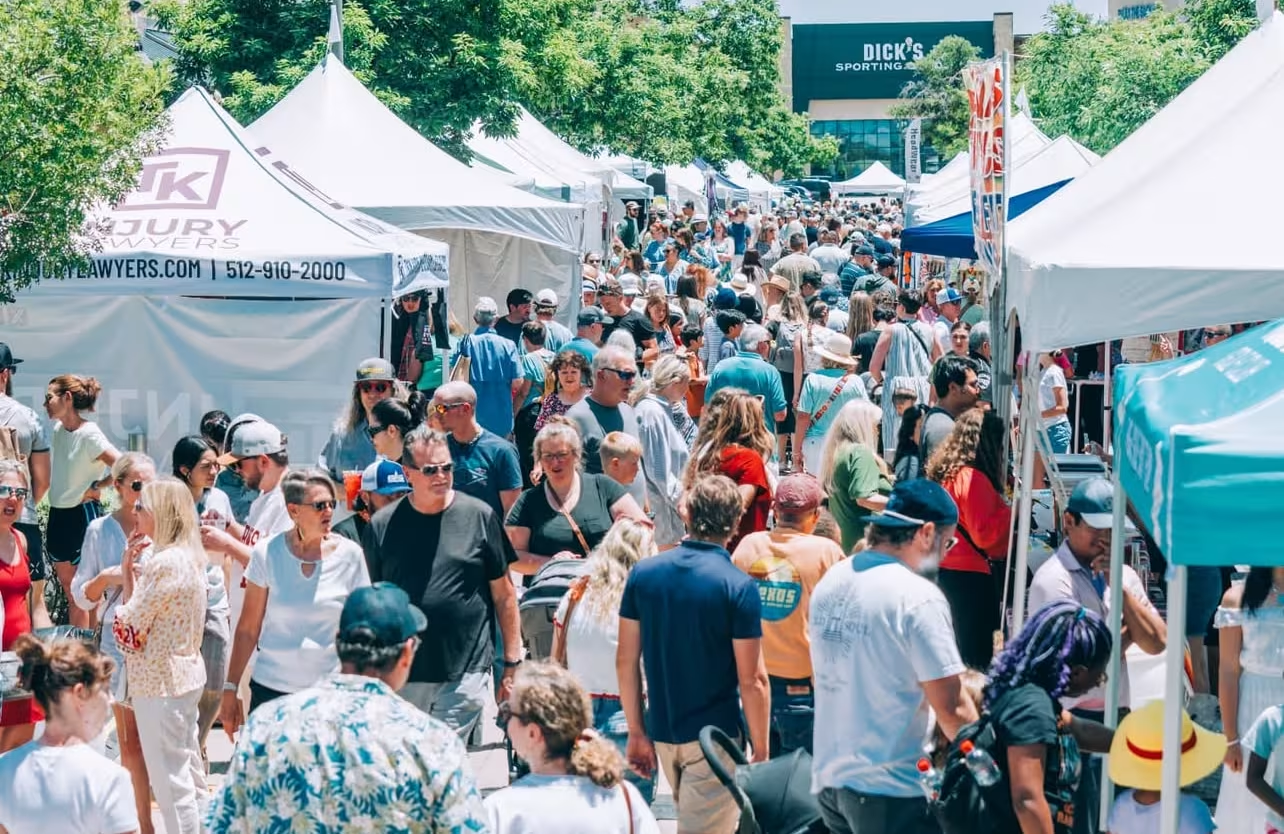
The East Side has seen absolutely crazy growth over the last few years. Gentrification has not just changed the landscape, it’s changed the culture. So, I was curious to see who would be at the block party. In years past, to see more than a few non-Black people at this type of event who weren’t politicians would be rare. But given the growing demographic shift, I wasn’t surprised to see the diverse, excited crowd.
The Black Makers Market was the epicenter of activity. There was music, kids running around, and Caribbean food wafting from a nearby food truck. The vendors did not disappoint —candles, Eritrean hot sauce, customized perfume — you name it, they had it. But my favorite was U4UDesigns. They sold beautiful African clothing, accessories, and textiles. I’m obsessed. The owner is Nigerian-born Unyime Udosen, who has lived in Austin for 30 years. I asked Unyime why she chose to sell at the event.
“I want to share my culture with everyone, that’s why I’m here. Black history is not just once a month, it’s year around,” she said.
Looking at the diversity of people walking around us I asked her if her stuff was for everybody. Without missing a beat, Unyime repeated, “everybody.”

George Washington Carver Museum, Cultural and Genealogy Center. (Nikki DaVaughn/City Cast Austin)
The Point
One hundred years of Black History Month feels like such a short time. Our history in Austin started way before 1926. Luckily, the Carver Museum is creating spaces where we can learn about and celebrate that history together while still being a hub for Austin’s Black community.
This year’s block party was definitely more diverse than I’ve seen, but it still felt very Black-centered. The programming has been pivotal in creating a welcoming, open, and diverse space for everyone in the community. I recognize the necessity of it, but I honestly still struggle with accepting the ever-changing face of my beloved East Side.
I’d be lying if I told you I wasn’t wanting to ask one of the white people why they decided to come to the block party, mostly because I’m nosey, but also because I want to help create that open space. I want to get to know the people who are changing my community.
I got that chance to do that with Kacie C. I asked why it was important for her to bring her four kids to a Black History celebration.
“I want this to be a regular part of their lives. We love community events, and we love community events that celebrate diversity and triumphs in different cultures. It’s an important part of Austin history. And I want celebrating Black people to be really regular for them,” she said.